Before We Teach, We Connect: Creating Calm, Trauma-Sensitive Classrooms from Day One
The first days of school are about more than routines and academics. Discover how relationships, routines, rhythm, and regulation create calm, connected, whole-child classrooms where children feel safe, valued, and ready to learn.

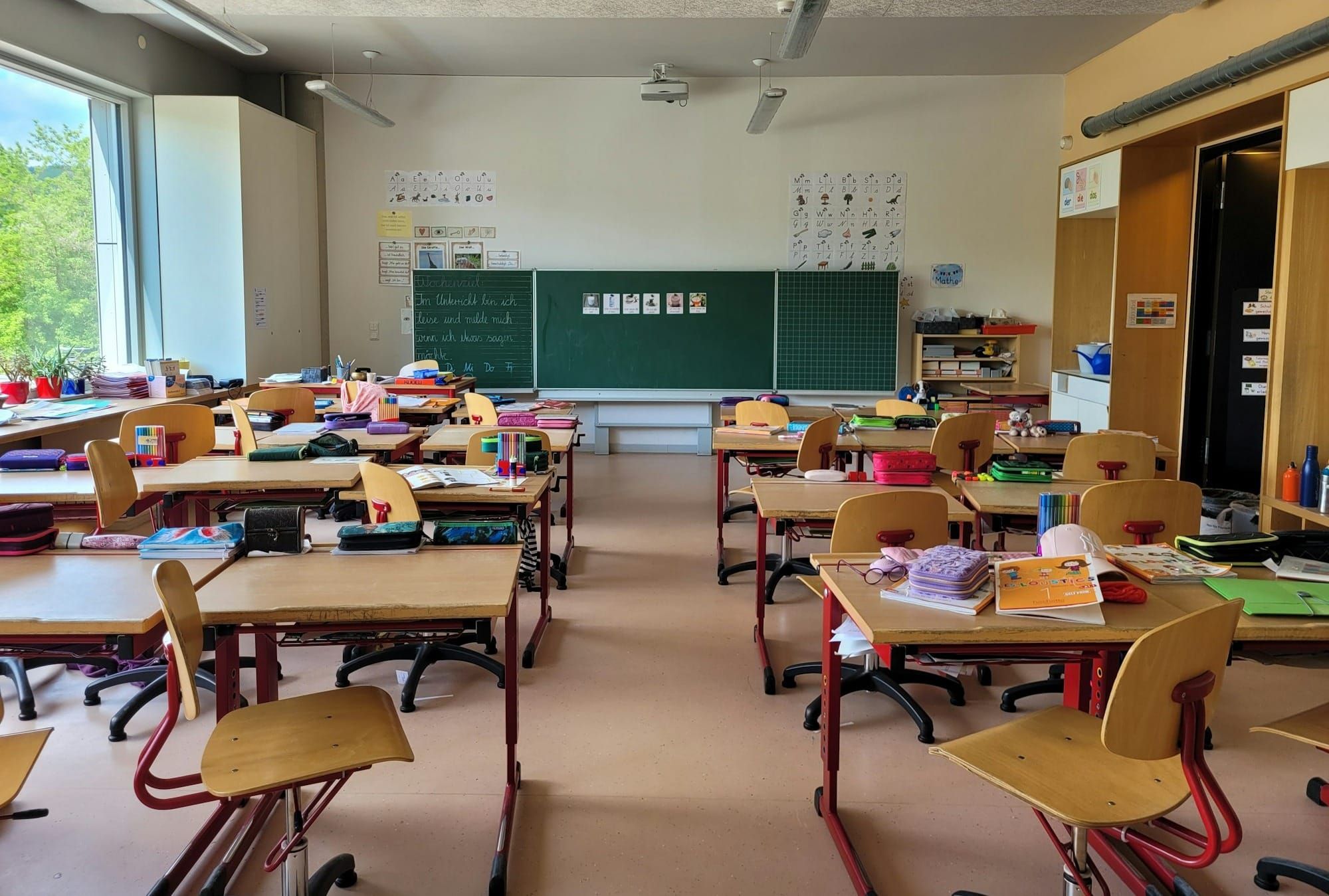
The first day of school is filled with anticipation.
Teachers have spent weeks preparing their classrooms, organizing supplies, planning lessons, and imagining the children who will soon fill each chair. They are excited. And if we’re honest, a bit nervous too.
Now imagine how the children feel.
Some children eagerly walk down the hallway with big smiles. They enter the classroom with an enthusiastic hello, put away their belongings, find their desks, and begin chatting with old and new friends. They leave that first day excited to tell their families all about it—and eager to come back tomorrow.
Some children are naturally quieter. A new teacher. New classmates. New routines. New learning. They quietly observe, cautiously taking it all in as they begin to navigate an unfamiliar world.
And then, some children are overwhelmed.
They cling.
They cry.
They simply cannot yet let go.
Tyler was that child.
He had been homeschooled. His world consisted of his mom and older brother. He had never been apart from his family.
Holding tightly to his mother's hand, Tyler cried across the parking lot. He cried entering the school. He cried walking down the hallway. He cried when he met me.
His mom cried too.
She gently pried his hands away from hers and turned to leave. Tyler ran after her, wrapping his arms around her once more. They both cried. She carefully separated herself again, closed the classroom door, and left.
Tyler sobbed.
He ran to the corner of the room and cried.
He cried and whimpered for most of the day.
That first day reminded me that the beginning of the school year is rarely about school.
The first day is about separation.
It is about accepting change.
It is about stepping into the unknown.
It is about facing fears and taking risks.
It is about discovering, “I can do hard things.”
Every child arrives carrying more than a backpack.
They carry experiences, relationships, strengths, worries, disappointments, hopes, and dreams.
Excitement.
Nervousness.
Joy.
Grief.
Love.
Loneliness.
Confidence.
Doubt.
Our classrooms today reflect an increasingly complex world. We cannot always see what children are carrying, but we can create classrooms that help lighten the load.
Research on adverse childhood experiences (ACEs) and chronic stress shows that what children experience shapes how they learn, regulate emotions, build relationships, and respond to stress. When children feel unsafe or overwhelmed, their brains and bodies stay on alert, and learning becomes harder. Not every child has experienced trauma, but every child benefits from classrooms that are safe, predictable, connected, and welcoming. These kinds of environments help children settle, trust, and take part in learning.
Before children can fully engage in learning, they must first experience a sense of belonging.
Before we teach, we connect.
Over the years, I have found that calm, connected classrooms are intentionally built upon four essential foundations:
Relationships
Children need to know they matter. Every greeting, conversation, smile, and moment of listening communicates, “You belong here.” Positive interactions, genuine curiosity, and calm redirection lay the foundation for trust.
Routines
Predictable routines create emotional safety. When children know what comes next, they spend less energy navigating uncertainty and more energy engaging in learning. Consistency builds confidence, trust, and independence.
Rhythm
Beyond schedules, classrooms need rhythm. Intentional moments to pause, breathe, reflect, transition, and reset help create a steady emotional pace that supports both learning and well-being.
Regulation
Children are not born knowing how to manage disappointment, frustration, fear, or conflict. They learn these skills through caring adults.
During the first weeks of school, teachers become powerful models of emotional regulation. Our tone of voice, patience, flexibility, and responses to challenges quietly teach children what calm looks and feels like.
These practices are not simply classroom preferences. They reflect evidence-informed approaches from trauma-informed schools, trauma-informed positive education (TIPE), developmental neuroscience, and whole-child education. Children thrive in environments characterized by safety, predictability, positive relationships, emotional support, and opportunities to develop self-regulation.
When these conditions are intentionally established, classrooms become places where all children can learn, grow, and flourish.
As you prepare for the new school year, remember that the most important lesson children learn during those first days is not found in a curriculum guide.
They learn whether this classroom is a place where they are safe.
Whether they are valued.
Whether they belong.
Tyler eventually stopped crying.
He made friends. He laughed. He learned. He grew.
But before any of that happened, he first needed to know he was safe.
Every child deserves that same beginning.
Before we teach, we connect.
This article is the first in a four-part Back-to-School series exploring practical ways to create calm, connected, whole-child classrooms. Many of these ideas are explored more deeply in my book, The P.A.M. Path: A Framework for Calm Classrooms, Resilient Kids, and Sustainable Teaching, where I share classroom-tested strategies for building environments in which both children and teachers can thrive.
Research-Informed Practice
The ideas shared in this article are informed by research in child development, trauma-informed education, neuroscience, and whole-child learning. Selected references are provided below for readers who wish to explore these topics further.
Association for Supervision and Curriculum Development. (2007). The learning compact redefined: A call to action—A report of the Commission on the Whole Child. ASCD.
Bartlett, J. D., & Steber, K. (2019). How to implement trauma-informed care to build resilience to childhood trauma. Child Trends.
Brunzell, T., Stokes, H., & Waters, L. (2016). Trauma-informed positive education: Using positive psychology to strengthen vulnerable students. Contemporary School Psychology, 20, 63–83.
Center on the Developing Child at Harvard University. (n.d.). Three principles to improve outcomes for children and families.
National Association for the Education of Young Children. (2020). Developmentally Appropriate Practice Position Statement.
Perry, B. D. (2006). Applying principles of neurodevelopment to clinical work with maltreated and traumatized children: The Neurosequential Model of Therapeutics. In N. B. Webb (Ed.), Working with traumatized youth in child welfare (pp. 27–52). Guilford Press.
Dr. Pamela J. Cernjul is an early childhood educator with more than 30 years of classroom experience and the author of The P.A.M. Path: A Framework for Calm Classrooms, Resilient Kids, and Sustainable Teaching. Her work bridges research, classroom practice, and education policy to help educators create calm, connected, whole-child learning environments.